How to Check Egg Freshness at Home: 4 Simple Tests
A rushed school-morning breakfast is not the moment to wonder whether the last few eggs in the fridge are still good. Knowing how to check egg freshness gives Malaysian home cooks a quick, practical way to cut food waste and cook with more confidence for the people at the table.
Fresh eggs also cook better. Their whites hold together for frying and poaching, and their yolks sit high and round. Freshness is only part of the picture, though: a test can hint at an egg's age, but good storage and thorough cooking matter just as much.
How to check egg freshness: 4 simple tests
Read the pack and inspect the shell. Follow the date on the carton and skip any egg that is cracked, leaking or dirty.
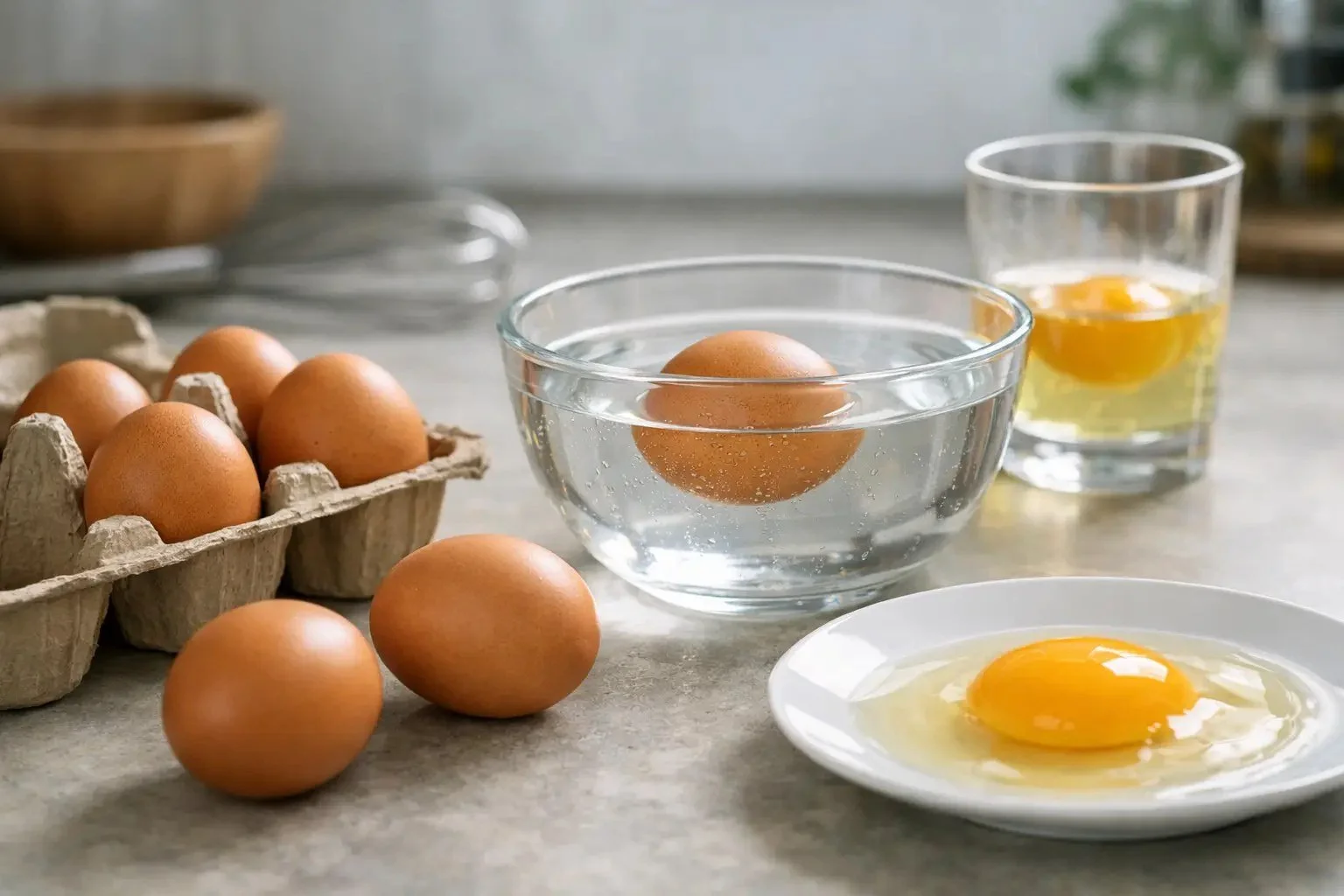
Do the water test. Lower the egg into a bowl of cold water and see whether it sinks, stands or floats.
Crack it into a separate bowl. Look at how firm the yolk is and how far the white spreads.
Smell it. A spoiled egg has a strong, unmistakable odour. Never taste an egg to test it.
Start with the pack date and shell condition
Before any kitchen test, look at the carton. Check the date guidance and make sure the shells are clean, dry and uncracked. A cracked egg should not be kept for later, even if it looks normal, because bacteria can enter through a damaged shell, especially in a warm kitchen or on a long drive home from the shop.
Avoid washing eggs before you store them. Water can help bacteria on the shell move through its natural protective layer. If there is a little surface dirt, wipe it off gently just before use, then wash your hands and the worktop. For more on why packaging matters, read why eggs in cartons suit family meals.
The egg water test, explained
The water test is a handy first check when you cannot remember when you bought a carton. Fill a bowl with enough cold water to cover the egg, then lower it in carefully.
Lies flat on its side: very fresh. Ideal for frying and poaching.
Sits on the bottom but stands upright: older, but often still usable. Crack it into a bowl and check before cooking.
Floats: discard it.
Why does this work? Eggshells have tiny pores. Over time, moisture and carbon dioxide leave the egg while air moves in and enlarges the air cell inside, so an older egg is more buoyant.
The test has a limit: it tells you about age, not safety. An egg that sinks is not automatically safe if it has been stored badly, is cracked or smells off once opened. Treat it as one useful clue, not a guarantee.
Crack each egg into a separate bowl
For the most reliable everyday check, crack each egg into a small bowl before adding it to your pan or batter. This protects the whole dish if one egg is off.
Fresh: a firm, rounded yolk and a thick white that stays close to it.
Older: a flatter yolk and a thin white that spreads across the bowl. Not necessarily unsafe, but less suited to poaching or a sunny-side-up egg.
Spoiled: an unpleasant smell or discoloured appearance. Discard it and wash the bowl, your hands and any surfaces it touched.
The small white string beside the yolk is the chalaza. It is a natural part of the egg that holds the yolk in place, and it is normal to eat.
Match the egg to the dish
Very fresh eggs: fried, poached, half-boiled or served over toast, where a neat shape matters.
Slightly older eggs: scrambled eggs, omelettes, fried rice, cakes and kuih, as long as they pass the date, shell and smell checks.
Hard-boiled eggs: eggs that are not at their very freshest are often easier to peel.
For baking, sauces and big-batch cooking, NutriPlus pasteurised liquid eggs are a practical option: ready to pour, easy to measure and no shells to crack.
How to store eggs in Malaysia's warm climate
Refrigerate eggs after purchase and keep them in their original carton.
Store the carton in the main body of the fridge, not the door, where the temperature swings each time it opens.
Keep eggs away from raw chicken, meat and strong-smelling foods such as curry paste and onions.
Use a cracked-open egg straight away. Store leftover yolks or whites in a clean, covered and labelled container in the fridge and use them promptly.
Egg freshness FAQ
Can I use an egg that stands upright in water?
Usually, yes. It is older but may still be usable. Crack it into a separate bowl and check the smell and appearance first. It is better suited to baking or scrambling than poaching.
Does a floating egg always mean it has gone bad?
A floating egg has a large air cell and is likely to be quite old, so the safest choice is to discard it. The water test cannot diagnose spoilage on its own, but it is not worth taking chances with a family meal.
Should eggs be kept in the fridge in Malaysia?
Yes. In Malaysia's warm, humid climate, refrigeration is the sensible choice at home. Keep eggs chilled after purchase and avoid leaving them out for long while you prepare meals.
Start with eggs you can count on
Check the shell, use the water test wisely, crack with care and store eggs chilled. Those small routines help every egg earn its place on the family table. Ready to restock? Explore NutriPlus table eggs for everyday cooking, or see how egg nutrition supports family meals.